FORWARD TO CHAPTER 29
* * *
The Miracle In Our Eyes
Today’s the 23rd of May 2020, it’s been three years since I ended up in the Intensive Care Unit for a burst appendix and sepsis. During my recovery, I was very aware of how little time might be left, and what I wanted to do with whatever remained. Faced with possible impending death most of us will wish for more time, and even though I truly felt wonder for having existed in the first place, and gratitude for the time I’d already had, I still wanted more. There I was, thinking I might switch off at any moment and now, three years later, not all that extra time has been used as wisely as I’d promised.
When we look at what happened to bring us to this present moment, it’s probably also worth considering all the things that didn’t happen that were involved too. This may seem a bit of a strange way to look at things but think how many times in a day we decide not to do things. It might be as simple as not getting up when the alarm goes off, waiting a bit longer before getting out of the shower, or not replying to a message. There may also be far bigger choices, for instance not having another child, not taking a plane, not accepting a job offer, or not telling someone how we feel.
I once wrote a song called For What We Didn’t Say which focused on how our lives may be stifled due to our inaction, especially when it comes to following up on a feeling of connection with someone. The same goes for all those who came before us, we are just as much a result of what they didn’t do or say as what they did. Of course, just as with our actions, we cannot know the ultimate consequences of our lack of them either.
When that German soldier bent down to help my grandfather and chose not to kill him, he couldn’t possibly see that one of the consequences would be you reading these words now. If there is an all-seeing being, then they’re probably aware of miraculous consequences all over the place, and likewise, tragic ones too. Whether there is such an all-seeing being or not, in many ways, given we can remember so much of our lives, we become a witness to our own life, albeit a very selective and limited one, and with the perspective time allows, we may come to recognise meaning in our actions and inactions that could never have been apparent at the time.
* * *
3.5 Million Years Ago “Little Foot”
Between 3 to 3.5 million years ago, one of our possible ancestors, a female hominid, classified by us as an Australopithecus Prometheus, walked on two legs, had similar proportions to present-day humans and stood at around 1.35m (4ft 5 inches). She was most likely middle-aged, her hands were very similar to modern-day humans, whereas her feet had extended big toes that were used for tree climbing. She may have spent her days foraging and nights sleeping in the trees.
One day whilst out searching for food, she didn’t notice a hole in the ground surrounded by foliage, as she started to lose her balance, she tried to save herself, but couldn’t and fell ten metres into a cave. Her injuries were so severe she probably wasn’t able to call or crawl out and it was there, alone, she died.
In 1997 some of her bones were discovered and over the next 20 years, many of her bones were excavated and reassembled by Prof Ron Clarke and his team. Her skeleton allowed scientists to gain incredible insights into the study of human evolution.
* * *
2020 – 16 Years of Not-So-Quiet Desperation
I started writing this book in 2004 which is around 16 years ago now, so it seems appropriate that this chapter is about my 16th year. By 16 I started writing a page-a-day diary, so, what that means for you is that there’s going to be a lot more to this, and the following chapters. As I read my diary from 1981 there was a “not so quiet desperation” within the lines and a resigned impatience for escape.
* * *
The Lack of Story So Far
If you’ve managed to get this far then you’re either enjoying or tolerating my digressions and you’ve possibly come to realise I’ve partly approached this as a metaphor for the experience of living. Sure, there’s a direction this book is going in, but this is about the journey, not the destination. I have read many books which took me on journeys that end in reunion and forgiveness, and yes, annoyingly they make me cry (a little). Both writers and readers will often give great importance to the ending of a story and rightly so, a disappointing ending can take a lot away from an otherwise well-told tale. But there is also something rather belittling about merely seeing the end of someone’s life in terms of entertainment or a brief emotionally charged kick for a host of onlookers.
In therapy, we once spoke about people wanting to leave a legacy, to feel that they would be remembered after their death, but who is it that people remember, probably no one resembling the real person? There was something about the process of therapy itself that brought about a feeling of being known, just as we might experience it in a “functional family” to a degree, and maybe that is far more important than leaving a legacy. For many of us, there isn’t just a need to be known during our living years, but also a desire to connect with others. So, maybe it’s a lack of fulfilment in those areas that drives some to focus so much on their legacy.
There was a lack of connection in my life at 16. As I walked the empty streets resembling ones I’d seen in surrealist paintings, I found myself looking for an open door to a house full of love and connection. Now, almost 40 years later, in my mid-50s, I’m sitting in a house next to the sea, (which I can hear in the distance), it’s 3:25 am, and I feel connections all around me, and I know I’ve said this before, but it includes you.
* * *
CHAPTER 29
* * *
1889 – Rēzekne, Latvia
Winter was drawing in. The ground was sodden and the roadway was turning from dry to wet. Three children, wrapped in shawls and clothes that matched the colours of the road and surrounding foliage, shuffled along, occasionally stopping to jump over puddles. A girl, in her late teens, was ahead of them and shouted without looking around, “Come on, we’re going to be late”. The three of them hurried, exaggerated a waddled gait for a short while, giggled and then forgot their mission of obedience. The day was almost over, the sky was blue, the sun bright and low, and the air cold. The girls marvelled at the length of their shadows as they danced and spun their way.
These were kids from the Jewish neighbourhood, but then most of this town was made up of the poor or the Jews. During the latter part of the 19th Century, Latvia was a rich country comparatively speaking, and Riga, its capital, was as grand as many of the other beautiful Eastern European cities. Its wealth spread out along the railways.
The preceding 30 years had seen the construction of the Moscow-Ventspils and Saint Petersburg-Warsaw railways which transformed Rēzekne from a small country town with a bloody past into a city of distinction. Even so, it’s hard for us to grasp the sense of oppression that hung over the Jewish population here. Technically, most Jews had to live in certain areas in Russia, defined as the Pale of Settlement, and whilst just a few years before, Alexander II had expanded the rights of rich and educated Jews to live beyond the Pale, his subsequent assassination (which was falsely rumoured to have been at the hands of the Jews), led to not only stricter adherence to the restrictions on where Jews could live but even more persecution, such as the rights of peasants to demand the expulsion of Jews in their towns and occasional pogroms (basically killing sprees).
Plans had been made for just eight blocks of houses to be specifically for Jews when the new city of Rēzekne was being built, but by 1889 a large majority of the inhabitants were Jewish. So, as the three girls walked with their older sister to the station, they didn’t feel the oppression keenly, but they did know they had to behave.
They got to the train station a few minutes early, the platform was full, but there was silence. Everyone was listening for the sound of the train vibrating the lines long before it, or its steam, could be viewed. As soon as it gave its strange-sounding warning, people started to talk and within 30 seconds, the steam puffed above the trees in the distance and a few seconds later, the train appeared. At first, it was urgent then as if it sensed all was not lost, it slowed, blew its whistle then came to a stop.
The girls and their older sister stood back as people waited to disembark or board. The carriages were so high above the platform that steps had to be put in place but for the daring or impatient jumping the queue became a sport. The girls were here to meet their father who’d received a dispensation to go to Moscow. Once he climbed down, he rushed over and picked up each child one by one, kissed them on their cheek and told them how much he loved them. As he did, they laughed and kissed him back. The older sister handed him a piece of bread, he surreptitiously popped it in his mouth and then smiled innocently at her, which made her laugh too. As they walked back home, he told them of his adventurous stay in Moscow, which of course, involved fighting off a few dragons and trolls, “Well, mainly trolls,” he said, “The place is full of them, due to the number of bridges there.”
* * *
1981 – Sixteen
Sixteen is a significant age in the life of a teenager, but in a way, it’s just an arbitrary age our culture has decided on as marking the delineation between childhood and becoming an adult. In other cultures, 13 might be the chosen age. Whatever age is decided on, it’s mostly related to the approximate age when puberty occurs. The problem is, not only do many people go through puberty at widely varying ages, but their response to it is often markedly different too. So, when people face coming-of-age rituals based on their age rather than their physical and psychological development it may well result in some being overwhelmed and unfairly burdened. Likewise, not recognising that certain children go through puberty at a far younger age means they tend to get labelled as being sexually delinquent or precocious.
When I had my 16th birthday it was just our society’s view, that on that day, I was somehow to be treated differently. However, knowing society now had expectations of me, probably triggered further changes, beyond those caused by my physiology. At 16, I was told I was no longer a child, but not an adult either.
* * *
1889 – Rēzekne, Latvia
As they approached their home the three young girls ran ahead, so, when their father neared the house, his wife came out to greet him. She looked at him, and he at her, but when he shook his head very slightly, her eyes lowered for a second, she smiled and reached out to him, and he took her hand. She looked at the girl who had led the three to the station, “Chaya, can you go in and set the table while I speak with your father, please?”
They stood in front of the house. It was made of wood and painted green. Just as all the other houses nearby were, they all had a door on the gable end, a window above it and another to the right. You would have thought of them as single-storey houses from the outside, but the window above the door lit the sleeping floor. The ground floors were not wooden, instead, they were packed with earth and stones with threshing strewn across them.
These eight houses had been built and bequeathed to this man, Boruch Berzin, by his father, which afforded him an income but with so many mouths to feed they had to live frugally. Having a large family would be seen as irresponsible nowadays, especially if you’re poor, but back then, it was the responsibility of families to go forth and multiply, especially for those of a religious nature and Nechama, his wife had always felt a close affiliation to her faith.
The evening light had almost gone, the air was cold and damp, smelling sweet with rotting leaves.
“It wasn’t so bad,” he said, “I have some extra orders, but I don’t think anyone is going to get permission to leave here for a long time, not without a lot of money”.
She paused and said, “Come, let’s eat”.
He touched the back of her hand, “We are blessed, Nechama. Even here.”
As they entered the house the children quietened, except for the baby who murmured. Boruch and Nechama sat down, bowed their heads, and the children followed too.
“Blessed are you…”
* * *
2020 – Negative Space
If I draw 3 dots your mind can’t help but form a
.
.
.
We naturally fill in the spaces.
But emptiness itself also informs us of what else is there, or at least what may be there. As I started to study Art more, I realised the importance of negative space, which is the gaps between or around an object that suggests its shape. A prime example might be the inside of the handle of a cup or the space between the legs of a chair. If you look at something now and look at what’s around it, then imagine the thing itself disappearing, would the things around it give you a clue as to what had been there?
So, one of the themes of this chapter is the importance of something not existing or not happening. For instance, when I start writing these chapters my mind becomes filled with thoughts and ideas relating to them, but if I don’t write them down, they rarely get remembered. Just imagine how much more you’d have to read if I was disciplined enough to note them all. So, sometimes, by something not happening, something occurs that wouldn’t have.
* * *
1889 – Rēzekne, Latvia
When Boruch had made his way to the station in Moscow he had two options for his route, they were both the same distance but one passed a bakery, and knowing he would be tempted to buy something to eat, he chose to go the other way. Had he gone past the bakery he would have heard the newspaper seller calling out the headlines. Had he heard the headlines, then his future would have been very different.
* * *
1986 – Therapy
Simon: I often feel lonely. Like I’m of no significance to anyone else.
Therapist: But do you think that’s true, that no one cares?
Simon: Well, I know my mum cares about me, but that doesn’t count. And I know some of my friends care a bit. But I feel like I need someone to make me feel loved.
Therapist: Do you think that there’s a part of you, that no matter how much love you received, it would never be enough?
Simon: Yes, I do, but how can I change that? I feel like I’ll always feel a bit lonely.
Therapist: Well, do you not think there’s a difference between an understanding that we are individuals that are interdependent, and feeling lonely? When you are happy, I could tell you that we are all separate and you wouldn’t give a fig, but when you are lonely, no matter what anyone says, you’ll still feel lonely. As I have pointed out to you before, we are not dealing with the rational part of you, but your deeper feelings. Where do they come from? You can’t rationalise away a feeling.
* * *
I thought for a moment about what she’d said, but I didn’t feel anything consciously, and even though I agreed with her, I still believed finding someone to connect with would help me escape my loneliness. What I wasn’t aware of then though, was a part of me yearned to feel lonely and would even be willing to scupper relationships to feel that way.
* * *
1981 – Retail Therapy
I had often enjoyed getting toys, as most kids do, but when I hit 16 Mum allowed me to keep some of the weekly disability benefit money for myself. This meant I’d be responsible for my karate subs and art-related purchases. But this also marked the start of me having a bit of an issue when it comes to retail therapy. As soon as I’d got the money from the post office, I’d often buy a music album or treat myself to a cuppa in the local café. It made me feel a bit better for a short while, but it was always at a cost because it got me into a pattern of not saving, but instead giving into my impulsive feelings. When Pink Floyd sang Quiet Desperation is the English Way I recognised someone who understood something of my world. So, I just had to go out and buy the album.
* * *
2019 – Retail Therapy
Nowadays I keep a list in my notes app of things I’d like to buy and by doing that it takes some of the urgency from my desire to buy them there and then. It allows me to window shop, which is tantamount to retail therapy porn. Last November I’d made a list of things I’d wanted to buy over the previous few months and waited till the Black Friday sales came. Sure enough, lots of the things I wanted were reduced in price, so I convinced myself that I had to buy them. They were all related to music making except one thing, a robotic vacuum cleaner which was so much cheaper than normal I knew I’d be able to resell it if it was of no interest, (which as it happens is what I did). Still, within 24 hours I’d loaded an extra £1000 onto one of my credit cards. There was a hum in the background, like a distant foreboding train that I could barely hear, but because I didn’t want to hear it, I didn’t.
* * *
1981 – January 1st
The first page of my diary for 1981 listed some of my hopes for the year. Among them were, doing well in my exams and karate, showing off less and improving my relationship with Mum and John. All of these were admirable enough, but it ended with a cringe-worthy, “because I will not lose my integrity.”
I think we had recently read “The Crucible”. A play by Arthur Miller (you know, the playwright who married Marilyn Monroe) and the play was about a man’s journey regarding his integrity. Being an impressionable 16-year-old, this had stuck in my mind. As things go, it’s not such a bad thing to be impressed by, but there is something about the scripts that people latch on to that can still be deeply disturbing to witness. It’s as if we’re watching someone detaching themselves from reality and falling into a world of pretence, and when that happens, it can lead to all kinds of trouble. Of course, the scripts we latch on to say a lot about who we are, or at least who we’d like to appear to be to others. But even so, it’s still…. Annoying.
* * *
2020 – January 1st – 6:30 am – Mark the Lodger
I was woken up by loud voices coming from the room below me. It’s a room I’d rented out to someone called Mark, but after he hadn’t paid his rent for several weeks and ran up an extra £1000 electric bill over the last 3 months, I went through the process of evicting him. His leaving date had been December 28th but because I felt sorry for him, I said he could have an extra month provided he didn’t fall any further into arrears, use any more electricity beyond acceptable normal use, (60 kWh/week), didn’t bring back strangers from the pub again and didn’t cause any trouble.
The night before this incident, New Year’s Eve, he told me he was going out for one drink, so I told him not to bring anyone back from the pub. He was staying on as a guest and was on borrowed time. So, when at 6:30 am I could hear a group of people in his room I rang him to find out what was going on. The phone rang, he didn’t answer and the loud voices continued. So, I got up, went downstairs and knocked on his door, but there was no answer. The voices were very loud and given kids were sleeping in the room below, I pushed the door open and said, “What the fuck do you think you’re playing at? You’re disturbing the whole house and it’s 6:30 in the morning.”
I was confronted by three people. Mark, a woman, and a man with a beard who were all a bit drunk.
“Mark, you promised you wouldn’t bring anyone back,” I said.
He looked a bit sheepish, sat on his bed and bowed his head. He was obviously the worst for wear.
“You can’t do this,” the woman yelled at me, “It’s illegal.”
I said, “It isn’t, he is no longer a lodger, and even if he was, I’d have the right to enter his room to stop this.”
The woman continued to shout that I couldn’t do this, and how her sister is a solicitor, so she knows, “it’s illegal.” I stood my ground and repeated my point. However, after about the fifth repetition, I added that she was an idiot, which didn’t go down well at all. It was then she put her face up to mine and continued shouting. I was tempted to give her a little kiss and say, “Happy New Year”, but I didn’t think that would improve matters.
She had screamed “It’s illegal” so loudly and so many times that the next day the kids downstairs repeated it to their dad, “Apparently, it’s illegal Dad.” “What’s illegal?” he asked. “I don’t know, but it is, the woman said so.”
Anyway, back to the night before. The man with the beard was trying to pacify things, Mark was sitting quietly on the bed, the woman was still in my face, and I’m sure was lining me up for a kiss too. I decided to show them I was recording them on my phone, which I wasn’t, but it allowed me to get my phone out and start the recorder. At that point Mark insisted they go home, so the man and woman left the house, but not without pretty much waking the whole neighbourhood too.
As I walked away from Mark he said, “Do you want a fight?”
I probably should have thought about this a little more, but instead, I said “Yes”.
* * *
1981 – January 4th
The house we lived in was on Park Lane, which followed the North to South Wallington, Carshalton boundary line running straight through the middle of the road. Our neighbours across from us lived in Carshalton whilst we would wave to them from Wallington. I once stood on one side of the street whilst rain poured just on the other side. Even nature seemed to respect the local boundaries, well at least once it did. Park Lane became a lot more honest as it went up the hill because, at a certain point, it became Boundary Road.
It was the first Sunday after the New Year, Stephen, my little brother, who was now three years old, was trying to get in the covers with me, but the cat was already there and given it was so cold wasn’t moving for anyone. The night beforehand I’d stayed up very late drawing a few pictures and writing a poem, so I was not particularly enamoured with the idea of having to share my cosy nest with any other beings. In the end, the cat and I made way, and Stephen, who was very bored got in the covers and decided I wasn’t going back to sleep.
When I got out of bed I grabbed the duvet and wrapped it around myself leaving both the cat and Stephen on the bed looking rather out manoeuvred. Stephen got up and started using me as a kickbag whilst I looked on. The sink, half full with slightly soapy water had a film of ice over it. I pretended it was a tile, and in slow motion brought my arm down on it, enjoying the sensation of it cracking. Stephen looked on, then started whacking it a bit too hard. At this point the cat, caught a few icy drops, jumped down from the bed and walked off, stopping a few steps later to lick her shoulder three times in disgust, then continued downstairs.
“Is John in?” I asked Stephen.
“No.”
“Where’s he gone?”
“To the betting shop.”
This was my cue to go downstairs in my pyjamas. Mum wouldn’t mind but John would always have a go.
As I got downstairs, I could see Mum was looking comfortable watching the TV.
“Can I have some breakfast please Mum?” I asked.
Laughing she said, “You know where it is. Can’t you see I’ve just sat down!” Then in a resigned tone, she half whined, half shouted. “Oh, don’t worry, I’ll do it in a minute after I’ve finished my cigarette.”
I think she intended for me to feel a bit guilty, but I didn’t.
Stephen, who was still upstairs shouted. “Dad’s walking up the road.”
I darted back upstairs and got dressed quickly.
A few minutes later I heard John’s key in the door.
I was just about to thank Stephen when he shouted down to John, “Simon was downstairs in his pyjamas Dad, that’s not allowed is it?”
“Was he now?” John said loudly, he laughed the kind of laugh the cat in Tom and Jerry laughed when he’d caught the mouse. “I’ll be having words with him a bit later then.”
“Stephen”, I said quietly, “you’re not meant to grass me up. We’re meant to be a team, and THEY are the enemy.”
Stephen laughed.
“Don’t worry,” I said, “You’ll see, and then you’ll understand.”
As I started to walk down the stairs I felt a book hit my leg. It was Stephen throwing one of his ladybird books at me. At the top of the stairs was a giant hard-backed illustrated Bible. The temptation was there, even the image of Stephen laid beneath it, with just his arms and legs protruding from under it was egging me on, but I was hungry and the smell of bacon had a stronger pull. So, I threw it anyway.
“What’s going on?” John shouted.
“Stephen’s throwing books up and down the stairs, and one of them is the bible,” I said
“Stephen!” John shouted.
* * *
June 2019 – Mark the Lodger
Things were going well with my lodgers, they all seemed very happy. I had even thought that they might stay several years, which was great as they were helping me pay my bills and mortgage which meant I didn’t have to work as much and could concentrate on my music. But I should have known not to think like that because, within a few days, one of my lodgers said she was going to have to leave.
So, now, instead of having a couple of hundred pounds extra each month I was going to be in the red by a couple of hundred. I got an advert out for a lodger and sure enough, no one enquired. Well, not for a couple of weeks, at which point I started to worry. When someone did get in contact, I met them straight away and thought, “Well, they’re not perfect, but as long as they keep their head down and pay the rent, what’s there to lose.”
A week later Mark moved in. A week after that he told me he couldn’t pay his rent on time that week, but he would be able to catch up soon.
* * *
1889 – Rēzekne, Latvia
When there are 15 children and one baby under one roof, then there has to be a lot of discipline. Boruch was too soft-hearted, so was used as an abstract threat, whereas Nechama was made of tougher stuff. There were routines, responsibilities, and rotas. The three older children were bringing in money and were itching to fly the nest. The way to freedom was viewed as marriage; the irony will not be lost on those who have been. Then there was making money or having some special skill or talent that might also lead to gaining an income. But these were just dreams to most people and the children of this world knew from very early on the difference between dreams and everyday life.
They were also keenly aware of their place as Jews, here in Rēzekne, which meant there was always a threat of danger. Even, surrounded as they were, by a large Jewish community, they became alert from an early age that one wrong word or action could be their last. Each layer of the community was there to cushion them from the next. Parents, siblings, family members, neighbours, and the local community, were part of the protectorate, then the Gentiles, the non-Jewish townsfolk, the country people, the rulers, the Russians and so on, they were dangerous.
Boruch was talented when it came to building, especially with wood, not just for building but carving ornate features. For these reasons, he was in demand, but with 16 children, even working all he could, they were still poor.
* * *
2019 – Mark’s Retail Therapy
Over the next few months Mark would continue to play catch up with his rent, some weeks he’d be ahead for a few days then he’d get two weeks behind. He’d tell me he was feeling ill, then spend two weeks in his bedroom recovering. This would become part of his regular pattern of behaviour. Get a new job, work for a week, get paid, then be ill for a week or two and lose the new job. It didn’t take long to see the coincidence of him getting paid and then feeling ill. He was either binge drinking or taking drugs. After a couple of months of this, I asked him to start looking for somewhere else to live. He agreed but didn’t take it seriously.
There’s something about having someone in your house you’d rather not, it makes you feel insecure. After another fortnight of not getting rent, I phoned him to tell him I was going to have to give him notice to quit as he was eating too far into his deposit.
“Stop hassling me. I’ll give it to you when I’m good and ready. Get off my fucking back!” he shouted.
“Are you downstairs?” I said, “Because I’m coming down to see you now”.
So, I went downstairs, and said outside his door, “I want a word with you”.
“OK,” he said.
I opened his door and said to him, “Don’t fucking talk to me in my own house like that. If you want a fight that’s a sure way to cause one. You should be apologising to me and thanking me for not kicking you out already.” [Lodgers can have notice equivalent to their rent payment intervals, which in this case would be one week.] “Instead, you’re giving me lip.”
“Sorry mate,” he said in his Australian accent. (“Mate,” said in such circumstances generally means “cunt” or “wanker”) “but my aunt’s just died and my mum is calling me all the time, it’s stressing me out.”
I looked at him and said in an incredulous tone “But you’d told me your mum had died last month and that was stressing you out then!”.
He shrugged and said he’d get the rent by the end of the week.
* * *
1981 – The Not-So-Secret Diary
The first part of 1981 was dominated by mock O-level exams, which would be followed by a further four months of preparing for the real ones. The importance of these exams was not lost on me. Whichever path I wished to follow required a good handful of O levels. So, my life centred pretty much entirely on schoolwork, studying at the local art college for my art-related exams, Karate three nights a week, and a little bit of socialising or letter writing in the evenings. There was a lot of letter writing back then, and even now I think many of us write lots of emails and texts each day so not much different, in fact, many of us probably write a lot more now. Oh, there was the poetry writing of course and recitals on the bus to school. And each night I’d write my diary which nearly always included a line or two about meeting a girl on the bus, “who was quite divine”.
I am sure when Sue Townsend wrote her book called The Secret Diary of Adrian Mole, a lot of people may well have thought that somehow, she had spied on their very own diary. But, whilst there is some crossover between her writings and mine, I never came across entries in her’s that, as you will read below, quite matched the finesse of mine:
21/4/81
We had a hard-ish lesson, in which we did a load of fighting. There was a bloke from a Taekwondo club, he got chosen as a substitute for the team, the cunt. He was a right old cocky sod.
8/6/81
On the way home, I saw Susan K, wow! She’s still divine. She’s hoping to become a hairdresser, and when she said, “Well I’ve taken 12 O levels,” I said, “I’m taking 9.”
7/3/81
I felt quite lonely today, but there are no poems.
25 April 81
John didn’t go to church as Stephen was wearing odd socks.
14/6/ 81
I read a load of good stuff on contraception and the woman’s vagina (??!!). I then settled down to murdering about 100 ants in our garden and kitchen.
[An analyst would have a field day with that one]
11th March 1981
At the bus stop, someone had stuck some racist National Front Stickers on the bus post. Sunil took them down for me. [Ever the white saviour] On the bus, I saw Penny, we carried on our discussion about equal rights and politics. I said I didn’t think that there should be seats just for disabled people on buses. I thought all the seats should be available for anyone with greater needs.
10/7/81
On the way to hospital, an Arabic man stood next to me and just stared – The ignorant cunt.
9/8/81
I went to see Bill and Gee on Powell Close, they seemed very racialist.
12/8/81
While drinking my coffee just a moment ago I saw a white cloud in it, so if I suddenly stop writing, I’ve been poisoned.
13/10/81 John tells me my photo of a kid having a pee was disgusting! – what does he know of true art?
3/12/81
To be faced with eternal loneliness is the ultimate horror. The day was normal. There was nearly a fight on the bus between two women over a window being opened.
Okay, maybe Sue Townsend did sneak a peek after all.
* * *
1889 Rēzekne, Latvia
Winter was moving in slowly, and with seasonal change, the daily routine would slowly adjust too. Routine was both constraining and reassuring, qualities the children, and parents, both associated with family and religion. Life for them was full of constraints. It was as if when babies were swaddled, they were being readied for life. But for each of them, there was also the desire to escape, to run away from each other, or with each other, away from this house, town, land, and life. Each day when they said, “One day Jerusalem”, what they were also saying was, “We need to Escape”.
As the children slept Nechama stroked them gently. But as they became older, she stopped and instead exerted tighter control on them. She knew the power of desire, and the struggles she had endured, so as her children became sexualised, instead of giving them more freedom, they got less.
* * *
1970 – Middle-Named
I have a memory of my mum telling me my middle name. I was about five years old and sitting next to her in Gran’s front room drinking from my light blue beaker and trying to delay being put to bed. On the television, there was mention of someone having a middle name.
Mum stroked my hair and said, “You have a middle name, Simon”.
I couldn’t help but feel as if this was a prestigious gift being bestowed upon me, so, I regally awaited the blessing.
“It’s Mark, your name is Simon Mark.”
I gracefully bowed in thanks and for years afterwards believed that was the moment she’d middle-named me.
When I met my father, he said he’d influenced the name Mum chose because he’d asked her to use his father’s, Samuel Moses. Whether Mum was influenced by this or not, I don’t know, but there is a similarity.
* * *
2020 January 1st 6:45 a.m – MARK
My middle name doesn’t feel like it’s my name, however, “Mark”, relates to Mars, the god of war. So, it’s apt in some ways. As you may have noticed, I have a bit of a bellicose streak and am too quick to react sometimes. So, when Mark asked me for a fight, I didn’t back down.
“So, Mark, you want a fight then?”
There was a long silence, as I waited to see what he would do.
We both stood on either side of his doorway. At first, it felt a bit playful, and as he was quite drunk, I didn’t feel very threatened. He was quite a bit taller than me, so when he feigned a movement, I parried his arm and put my foot gently to his stomach.
“Careful Mark,” I said, “You’re not going to win this.”
“You reckon?” He slurred.
I could sense his mood darken.
There was another long pause and then I could feel his arm move towards my head. I didn’t see it, but automatically turned my face away, and pushed my left arm upwards to block his punch. As my phone was still recording, I was able to listen back after and this all happened within about 1.5 seconds, but my memory of it was more like five seconds.
As I pushed my arm up I imagined I was pushing a bag up into an aeroplane’s overhead storage compartment. But what happened was my arm went straight up into Mark’s neck which brought him off his feet. I then turned towards him to deliver a strike and, even now I can recall deciding on whether to deliver a fast penetrating strike to his torso or more of a push. I went for the latter.
The next image I have is of him staggering backwards and falling on the floor, dazed, and almost unable to right himself. During this bit, my adrenalin kicked in and I shouted, “Do you want some fucking more Mark? Cos, if you do, I’m gonna kick you in the fucking head!”
“That’s assault,” he said, “I’m gonna call the police”.
“You do that, and I’ll play the cops the recording of you throwing the first punch,” I said, my voice much calmer. “Just go to sleep and we’ll talk about this tomorrow”.
As I walked off his door shut.
Even though he was drunk, and if as he claimed the next day, he hadn’t gone to punch me properly, I was pleased my karate training had kicked in.
Mark did try reporting me for assault a few days later, but when I told the police about it and played them the recording they couldn’t stop laughing, which kind of made it all the more worthwhile. They then informed him that it was going on record that he had committed a common assault on me as he had thrown the first punch. However, they did suggest to me that when he asked for a fight, I should have sidestepped the issue.
So, all’s well that ends well. Although, as we’ll see, it didn’t.
* * *
1981 – Routine
When I say my routine in 1981 resembles the one throughout much of my life, what I’m talking about is the outer shell of who I am and by 16, it had already taken on a clearly defined form. Inside though, my inner core was by no means anywhere nearly as “developed” and probably wouldn’t be so for many decades.
The paradox of these separate identities is whilst the outer shell was mainly a front, it would often keep the inner part of me afloat during some of the bad emotional times to come. When my inner self collapsed, my outer shell would continue to operate, especially in its creative pursuits, and in that way, I would be able to ride the waves of desolation.
Even before ever coming into contact with psychoanalysis, I had experienced different levels of consciousness in myself. Not in any mystical way, but simply by looking up into the sky and seeing things floating in my vision, small chains of dots that I could chase around as I moved my eyes, and then there were voices in my head that seemed to be independent of my conscious thoughts. It wasn’t anything like schizophrenia, just in my half-sleep moments, I’d be aware of my inner world existing. As you may recall at 4 years old I’d hear some of the voices saying, “The wolf”, repeatedly as I tried to sleep in the dormitory in Barnardo’s. As much as I pleaded with them to be hush, they seemed to have a life of their own.
Later, when I was seven or eight and mum had her violent boyfriend, Michael, my night terror dreams of wanting to escape the impending train crash or sinking ship, felt like films playing out in front of me. I felt I was watching from a near-long distance but, try as I might, there was no way of waking up or escaping them.
I once heard in a film about Freud that he’d stated we struggle in life to avoid manifesting the negative aspects of who we truly are, yet for most of us, it is unavoidable. I was never able to substantiate if he said that, but it did resonate with me, in fact, it scared me. I have lived my life worrying that the anger in me could be so strong that it would destroy me, especially through an act of rage.
When Mark faced me off, I was just as worried about what he might do to me if we fought as what I might do to him if I lost control. As he hit the ground, I looked at his head and had he appeared to me to continue being on the attack I would have kicked his head with force. Fortunately, he didn’t.
* * *
1986 – Therapy
Simon: I had a dream about being on a train that was running people over.
Therapist: What do you think it means?
Simon: I don’t really know.
Therapist: Can you remember anything else?
Simon: I felt disturbed by it. I was on the train in the dream, and when I woke up, I felt relieved it was just a dream, but I still felt a bit depressed by it.
Therapist: Do you think you felt guilty, after all, it was your train that went over them.
Simon: Well, I didn’t choose to do that.
Therapist: But it was your dream. Maybe you were trying to tell yourself something. Do you think it might be reminding you we can sometimes be a part of something that has dire consequences for others, and that’s what we find difficult to cope with?
Simon: I think that’s true in a lot of ways, even being part of our society means people suffer as a consequence of our gains.
Therapist: But on a more personal level, can you see any parallels?
Simon: Like the tracks?
Therapist: It’s interesting that you make that connection.
Simon: Are we playing railway metaphors?
Therapist: You like to use humour to avoid the feelings brought up by this dream.
(I would come back to this dream in a few artworks and songs. It was the beginning of understanding that my behaviour would sometimes cause me to feel lonely or depressed. Even so, it didn’t stop me from behaving that way.)
* * *
1981 – After the Exams
After taking my O-levels, a two-month break from school sprawled ahead of me and beyond that, I knew going into the 6th form would be very different. I could feel the touch of freedom and loved it.
In the first week, I sat out on the concrete paving in the back garden and tried to read Shakespeare’s Romeo and Juliet. The white of the paper was so bright in the afternoon sun, that my eyes watered. I closed the book and thought about how I could fill this time.
On the last day of term, I went to one of my school friend’s places and when we got there, he showed me a camera he was selling. It was a Chinon CS SLR 35mm camera with a built-in light meter and fully manual override mode. It was one notch up from the bottom rung Russian-built Zenith, but I knew I had to have it. That marked the beginning of my interest in photography. Once we’d secured that deal, he tried to sell me a synthesiser, but “what was I going to do with that, I can’t make music,” I thought. And until computer-controlled music became available, I was right.
Even so, during this break, there was a moment when I came in contact with the songwriter in me. One of the other boys in my year, Daniel, was a very proficient musician for his age. He had heard me imitating Elvis and said I should come around to try recording something with him. So, we met up and whilst he played on a guitar, I ad-libbed lyrics and vocal melodies which we recorded on to cassette. What I came up with wasn’t any good but being able to come up with lyrics on the fly as well as melodies is something I still utilise sometimes to get ideas for songs nowadays. So, by 16, I’d already discovered an interest in songwriting, writing, photography, painting, karate, and studying, which is pretty much what I still focus on now.
* * *
1889 Rēzekne
Although religion figured heavily in nearly everyone’s life in Rēzekne, many Jews were not part of the Orthodox church. Consequently, they dressed similarly to their Christian neighbours, and likewise socialised, danced, went to the theatre, were entertained by musicians and singers, and tried to live their lives to the fullest as best they could, but it was a precarious truce.
Life was dominated by work, family, and the traditions of Jewish culture. Families would meet up, the children would play whilst the mothers would look out for possible matches, and when their children became young adults, they’d either choose each other for marriage or the decision would be made for them. This was the outer shell of their world, but their internal worlds were filled with dreams. During daylight, people were acutely aware they could be seen, but at night, on their sleeping floors, there were silent stirrings that were never to be seen in the light of day.
* * *
1981 – SUMMER
Peggy Waites had been a helper at the riding school for disabled children I’d attended and had taken an interest in me and Mum over the years. She was also the widow of a building tycoon. One afternoon she invited my mother, John and me for tea. Whilst they chatted in the house I swam in her outside pool. There was no one else around, so I swam a few lengths underwater, lay on my back, looked at the sky, took in the deep colours of the trees, then realising that this wasn’t so much fun when alone, so I went to the dressing room and started to change.
A minute or so later the door opened and a woman, probably aged between 45 to 50 walked in. “Sorry,” she said “Do you mind if I come in? Don’t worry, I’ve seen it all before.”
“Yes, I don’t mind,” I nervously answered.
She started to chat to me as she undressed. My heart started to race but I was soon disappointed to find she already had her bathing suit on under her clothes. I, however, had my towel strategically, yet precariously positioned. She kept chatting and looking towards me. She even asked me if I needed any help and I stupidly said, “No I’m fine thanks.”
I couldn’t help but feel a bit turned on, there was a part of me that wanted to be physically desired, and the notion of that was arousing.
“What’s your name?” She asked.
“Simon,” I said.
She smiled “I’m Jean, pleased to meet you”.
I asked her where she lived and found she didn’t live far from me, so I asked for her phone number and said I might visit one day if that was okay.
“Yes, that’d be lovely. You can come and meet my husband and my children, they’re about your age. I’m sure they’d love to meet you.”
This wasn’t going the way I’d hoped it would.
* * *
1985 – Therapy
Simon: I feel that women have the power when it comes to relationships.
Therapist: What do you mean?
Simon: Well, a man might want to go out and have sex but unless he finds a woman who wants him, it’s not going to happen. Unless of course, he rapes someone.
Therapist: That’s an interesting connection you’ve made there.
Simon: What do you mean?
Therapist: Well, you’ve connected rape to a man not getting their way.
Simon: Well, I didn’t mean that’s an option I’d consider.
Therapist: It’s worth noting the connection though.
Simon: What are you getting at?
Therapist: I’m wondering if the idea that you’re powerless in some ways causes feelings of anger in you. In a way, it’s an echo of most children’s experiences. Won’t they, at least at some point, experience having a tantrum when they don’t get their way? Even in adults, you can see this happening all the time when people have road rage.
Simon: I suppose you have a point, thinking women have most of the power in this situation does make me feel a bit resentful.
* * *
1999 – The Gangster Who Went Straight
One of my clients was quite a famous journalist and TV personality. I won’t say his name as I don’t want to be prosecuted for misquoting him but before he was a journalist, he was a gangster, so I’ll leave it up to you to work it out.
One day he and I were chatting about women’s sexuality. He started telling me that when men witness women’s unbridled sexuality, they find it threatening. Not only does their orgasm look far more overwhelming than a man’s, but to see in a woman an equal amount of relinquishing control to nature makes them realise that they are up against a formidable foe. If a woman is free to do as she pleases then anyone who connects with her will fear where her desires may take her. The same could be said about men, and that’s what scares them. They don’t want women to have the same freedom they have.
Afterwards, I thought about the irony of men transferring responsibility to women when it comes to dealing with the aftermath of their desire. In other words, a man may blame a woman for the way he feels, or what he does, when really those feelings and actions are his, and his alone. So, on one hand, men want to curb women’s sexual freedom, and on the other, they want to blame them for causing their own lust.
Now, this might come over like I’m virtue signalling in an area of politics which isn’t my domain, but I’m partly bringing it up because as time went on, I became very aware of just how central this theme was to me personally.
My mother had seemed to abandon me, and maybe in my subconscious it was for another man, so I was possibly more primed to feel jealous and possessive than most. Then, as I got older and became interested in sex, not only did I realise I was powerless to a large degree when it came to attracting women, but I understood that some women might be just as unfaithful and lusty as myself. To make things worse, if I were to try to tie a woman down then that would destroy the relationship, and the final icing on the cake was, a lot of women felt the same way as I did. On top of all that, some men were just as attractive to women as women were to men, men who could pretty much pick and choose who they wanted, and worst of all I wasn’t one of them.
Unfortunately, no one taught me about those dynamics, I had to learn the hard way that if I felt the need to exert control, I’d already lost. If I couldn’t let go of my desire to possess then everything would slip from my grasp. If I couldn’t love someone enough to just let them be who they are, then I didn’t love them at all, and likewise, if I felt I couldn’t accept they might not stay forever, then these might not be feelings of love either.
All these ideas went completely against my instincts or inclinations. I can’t blame anyone who feels such feelings too, as, for many of us, this is how we experience love. But the point is, these feelings are probably just as destructive as the things we worry about, so it’s worth paying attention to them if you think they might be your undoing.
This desire in me to control and possess, wasn’t just a socially learned way of thinking, nor was it just a primaeval biological process, it was also a result of the way I’d reacted to my relationship with my mother and absent father. Please note that I would like to emphasise the words “the way I had reacted” because who I intrinsically am is part of all this too.
* * *
2007 – What if
In one of my poems, I wrote, “What if what I do, kills the love of me in you”.
* * *
1981/2020 – Letters/Emails
In 1981 I would often write letters, and now in 2020, I write emails and send messages and texts as most people do. But lately, I’ve been delaying my replies to some people to bring back something of the delay of letter writing I’d experienced before the Internet came into my life. If you haven’t tried doing it, it’s worth a go, but of course, let the person know what you’re up to beforehand otherwise they’ll probably call the police to check you’re okay.
When email became popular it changed the nature of writing. The speed at which a reply would come back meant the nature of the communication changed too. In some ways, it was a bit oppressive, or at least it felt demanding. Instant messaging isn’t so bad because it often doesn’t require a reply or if it does, it can be concise. But writing a letter requires time to reflect more deeply upon the feelings, words and thoughts being sent.
* * *
2020 – Gurdjieff and the Essential Self
When I think about my outer shell becoming more distinctive at this point in my life, I’m reminded of the philosopher George Gurdjieff, whose work was very focused on trying to find our essential selves. He believed that the soul we are born with gets trapped by personality and is kept hidden and unexpressed, leaving us not truly conscious. For him, there was an onus to free our souls. I mention this because no matter how happy or oppressed we find our lives to be, there will often be a desire to escape. It might be something obvious, like pain, but then it could be death and for some even, life.
As the seconds pass us by, we don’t initially notice the erosion or build-up of that which covers who we are, but in time we recognise the changes. We see what is and what was, and the more we lose our self the harder it is to be connected with who we truly are.
* * *
2020 Looking At A Photo Of Esther
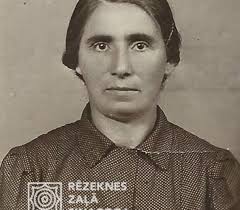
I’m looking at a photo of my grandmother Esther Berzin, she’s probably in her 40s in it. There is something disingenuous about old photographs of our relatives, they look so staid and posed, yet if they were to jump down from the photograph into our life now, we could see them as the animated humans they were, we could see that in so many ways they’re just like us.
When I look into Esther’s eyes in this photo, I see her pain, I don’t feel it, but I can see it’s there. There must have been many moments of happiness too though. Looking at her in her mid-40s she looks so weighed down that it’s almost impossible to see her as a young, hopeful, laughing, in love, lusty woman. She would come to have five children, were they borne of love and lust or duty?
As she got older, she’d enjoy growing produce she’d sell from a table in front of her house, just as her mother had done too. Her life in many ways was simple, but even a simple life can be filled with complexities and suffering.
As the Nazis grew ever more powerful, she knew she would have to leave her homeland. Even though she had yearned to leave it for so long, leave behind all the hatred towards her and the whole Jewish community there, when the time finally came to step upon the boat, with her sons, Eliezer and Boris, by her side, she looked back, and all she could see was herself standing on the dock, waving goodbye.
I don’t think it’s any coincidence that many people fall ill with cancer around a year to 18 months after suffering a psychological trauma. Even the word Cancer connects to the notion of a crab, just like it does in astrology, but in medicine, it’s partly because there is a hard-outer shell to many tumours, partly the sensation of being pinched or gripped by a painful unyielding force, and partly the protrusions appear just like the legs of a crab. On top of that, crabs will often seek out empty dark areas to inhabit.
The reason I’m ramming this home, possibly, a little too harshly, is to bring attention to the physical repercussions of psychological trauma. One might argue whether it’s a good idea to burden someone who is recovering from a difficult time emotionally, but to me, just being a little bit more vigilant during such times is probably a good idea.
As Esther approached her death, she cried out for someone to kill her. My father would often say to me that he’d have done it for her, but he wasn’t allowed to, and this was way before palliative care was available to the likes of Esther.
* * *
2020 – The Crow – Part 1
I can hear the noise of a bit of debris falling down the chimney, I’m on the first floor, and it sounds a bit like an animal is moving around in there. Like there’s a struggle, but I’m not sure. Later, I am in the room below. I’m sure I can hear a sound, but it’s quiet and repeats twice, it’s almost computerised. I pull out the tumble dryer which sits below the chimney stack (the bottom part of the chimney was taken away years ago). I get my mobile phone and take a photo up the chimney. I’m a bit scared. If there is an animal up there it might attack me. But there’s no noise, and the photo doesn’t show anything out of the ordinary.
The night before I’d dreamt I was speaking to a crow, but maybe it’s all in my imagination.
* * *
1981 – Voluntary work
I knew I ought to fill some of the summer holidays doing something worthwhile and because I’d applied to do my Duke of Edinburgh Award I went to the local volunteers’ association and asked them if there was anything I could do. By the way, I never completed the Duke of Edinburgh Award due to the expedition section of it becoming a bit too difficult for me, plus I had a very bad attitude.
I got a phone call from the woman at the volunteers’ association, and she said that I could go to the patient’s classroom at the hospital to meet the teacher there who would discuss with me some possible work.
* * *
1981 – Queen Mary’s Hospital for Children – Carshalton
It was a hot June afternoon when I visited the woman who ran the classroom. I’d turned up topless, my T-shirt in my bag, my bag flung over my shoulder. It didn’t even go through my head that this might be inappropriate. The woman was called Janet, she was slightly big built and had copper-coloured hair that stopped just above her shoulders.
We got on straight away and made a plan for me to come back over the next few weeks and help paint cartoon images on the windows. Which I did. The pictures came out far better than I thought they would, and when we finished, I asked if there was anything else I could do. So, Janet called a few of the wards to see if they had any opportunities but when I called back to find out if there were, she said that the hospital had refused my offer because they were worried that due to my disability, I might get injured, and they couldn’t take that risk. After our conversation ended, I called the volunteer association and spoke to the woman in charge. Before I managed to get a word in, she told me she was very shocked and disappointed to hear that I had turned up topless for my interview. “Shit”, I thought “you’ve got me there… And thanks for grassing me up Janet, don’t come begging on your knees for forgiveness when I’m a famous painter and you want your portrait done!” When we finally got past that minor faux pas the volunteer association lady said there was nothing she could do and put the phone down on me.
I was so annoyed I walked down to the Art Shop in Carshalton High Street, which had kindly put my rubbish portraits of Charles and Diana in the window to sell; well actually they weren’t that bad, but I had made Diana’s teeth look like she’d been chewing liquorice, so needless to say, they didn’t get the price I’d hoped for or, indeed, any price at all. Anyway, I often chatted to Charles, the owner of the shop, not the prince who was just about to get married to the wrong woman. So, I thought I’d get his opinion on the whole issue of not being allowed to help because of my disability. The thing is, for people who haven’t spent a lot of time pondering these issues, it’s hard for them to offer anything unexpected, so I came away just thinking that this is the way of the world, and life’s not fair. But I knew it wasn’t right, so I went home and wrote an essay about it. I was beginning to take on board that society can choose to make provisions for all kinds of human needs, and it’s less about natural law and more about what we believe society should be about.
Here are a few lines from one of my early disability-issue-based songs:
We don’t live in a jungle
We’re here to live by the law
We’re here to give and to gain
But who is all of it for?”
This was still an era when single women trying to get a mortgage for a house had to get a male to sign for them, but it was also a time when things were beginning to change. In 1982 the mortgage laws changed so a male signature was no longer required, and the disability rights movement began to make headway on its long road towards legislation.
* * *
2020 – MAY 22nd – The Crow – Part 2
In the room where the tumble dryer is, there’s a door to the backyard. As I walked back in through that door, I was sure I heard that noise from the chimney again. Was it the freezer? I tried to imitate the noise, but nothing came back. I wasn’t certain but I got the feeling there was something trapped in the chimney. That night I looked online to see how to deal with trapped animals in the chimney, the solutions either involved big costs or putting up with unseemly odours and guilt for some time. I thought the chimneys had cowls on them, but the winds are strong here so maybe they’d been damaged.
* * *
1981 – Queen Mary’s Hospital for Children – Carshalton
During the days I’d been painting at the hospital I’d gone to the staff canteen to eat and it was there I met a few nurses (I know what you’re thinking) and a few other volunteers. So, after I’d been informed my services were no longer required, I popped back in to share my good news and to say goodbye. However, one of the nurses I spoke to was a sister on one of the wards and she told me she hadn’t been asked and would be more than happy for me to come on to her ward and play with some of the kids there. So, over the next few weeks, I popped in and helped break up the monotony for some of the long-term patients, who I also became quite attached to.
After these sessions, I would go to the staff canteen for some cheap hospital food which I liked due to my years at Roehampton Hospital and befriended a couple of the staff members there, especially one called Jill. During my “work” on the ward, I became friends with one of the other volunteers as well, who had bright red hair and was called Lisa. Both Jill and Lisa would feature in my life a lot over the next few years and through them, I’d get to meet other people of significance too.
* * *
1981 – Ann And Paul
I have already mentioned Ann and Paul to you. Ann became a second mother not only to me but to many other people too. She was the one who’d visited me when I’d had my foot amputated and years before then I’d met at the crocodile pond party. She also had a naked photograph of herself on the bookcase in her front room that I would spend time studying whenever the coast was clear. Sometimes she’d catch me and laugh, “Oh sweetheart, what are we going to do with you?” I had a few suggestions, but I kept them to myself.
It was probably around this time in my life I started to visit them more frequently. They lived a short walk away from the hospital where I was doing the “voluntary work”, and outside of feeding me, they were very happy to either listen to my tales of woe, admire my artworks and poetry, (just for that they both deserve sainthoods), and then they’d drive me to my local friends or home afterwards. (I don’t think I put reading my poems and suddenly being offered a lift home together at the time).
* * *
30th July 1981 – The Commission
One of the boys at school, Cameron, told his mum that I was becoming quite good at Art, so she asked me if I’d be willing to be commissioned by her to paint a landscape of the Gower Peninsular. I agreed to it, so she came to the art shop with me and bought £9 worth of materials, which was quite a bit of money back then.
The thing is, I couldn’t do it. For some reason, I just put it off and it never got it done. Letting them down still haunts me today, so much so that almost 40 years on I feel I ought to do it now. I’ll let you know if I ever do.
* * *
1889 – Rēzekne, Latvia
In Britain and other Western European countries, people started to move away from the countryside and into the cities. For centuries, if not millennia, people had lived a life of subsistence, but in the more industrialised countries, farming was becoming industrialised too. While this inevitably led to fewer opportunities for land workers, it also meant there was more surplus food which in turn meant greater opportunities for people to follow other careers. But in Rēzekne, the Berzin family’s paths were very much set. Instead of learning to read, the children learned to forage, not just for food but also for medicinal bark, herbs and plants. Instead of doing sports, they were physically exhausted by the end of the day from dealing with the family’s smallholding or delivering goods to local customers.
The family had acquired a few musical instruments over time; some of the flutes had been carved by Boruch, and a battered fiddle and bow had been a family heirloom. The children had all, at some point picked them up enthusiastically, but after a few minutes of nothing sounding good, put them down, much to the relief of everyone else. Boruch lived in the hope that there would be at least one child who would persist and magically learn to play by ear, but it didn’t happen.
Boruch’s large family was very unusual, most Jewish families had three to four children during this period, so just by their size, they were well known in Rēzekne. Boruch was popular and given Rēzekne had such a large population of Jews, there was generally a sense of them being safe.
In Riga, the capital city, the Jewish population had secured some rights, which was in some small way, progress. Especially because during Nicholas I’s reign, 600 laws over 30 years had overly regulated Jewish people’s lives.
Whilst the Jews in the countryside mainly focused on providing essential goods to each other as well as non-Jews, the development of large-scale trade and industry was more the domain of those who lived in the city. Wood industries, flax processing and even alcohol production were particularly successful. One Jewish merchant built and ran the largest match factory in Russia. While others focused on the buying and selling of grain. By the end of the 19th century, ten banks in Riga were owned by Jews.
However, after the murder of Alexander II in 1881, there were outbursts of political and economic anti-Semitism followed by anti-Semitic riots, during which over 40 Jews were killed, and hundreds of women were raped. On May the 3rd, 1882, Alexander III demanded that any Jews in Riga, Jelgava and Liepāja who did not work in officially registered professions had to leave the cities. Even four years later, the newspaper “Dienas Lapa” wrote:
“[Jews] clearly show us how a small and despised people can become strong. Their example overtly shows what people can achieve through care, patience and a strong community.”
So, to be able to live in relative peace, when such hatred was only a train ride away, was a gift that Boruch and Nechama did not take for granted.
* * *
2020 – Mark the Lodger
After Mark moved out, he left his belongings in situ. Legally, I had to give him 14 days to remove them. I got a few people in to clear out the room, all of which had to be videoed as evidence in case he was going to make a claim against me for any losses, but after 14 days, the law states that the belongings can be sold or given or thrown away, if not kept. Any revenue collected from sales must be kept for six years, and small expensive items should be kept for the same duration too. A night after he’d moved out, he called me at 2 am insisting he pick up his medicine, and if I didn’t allow him to do so he might die, then I would be responsible for his manslaughter. I was up anyway, so let him in and as I sat and watched him get a bag full of pills, he told me they were illegal drugs, prescription opiates that he’d bought from dealers. “I’m a dead man walking,” he said.
“I’m sure that’s not true” I replied, hoping I was wrong.
For the first few days after he’d left, he came back to pick things up, it was then he’d ask me if he could take a shower. I relented, but a few days later he also asked to do his clothes washing. I told him that after that there could be no more showers or use of the facilities. Maybe it was that which set him off, but he decided to pick a fight about cleaning the microwave, because, as he put it, “someone else had used it.”
When I told him he was wrong, that he was the only one to have ever used it, he called the police because I wouldn’t leave him alone in the room. When they turned, up they spoke to both of us separately, then told Mark that he must organise getting a van to take all his belongings in one go. He agreed to this but when it came to it, didn’t do anything. So, after a week of not hearing from him, we emptied his room, put his stuff into boxes in another room, and started the clean-up job which was costly and disturbing. There were blood stains on the bed and lots of other unsavoury things to be dealt with.
During the clear up it came to light that Mark was on migration bail, which means he’d overstayed his visa but was awaiting trial. He’d been prosecuted for trying to blackmail a woman with a video he had of her doing something sexual. Plus, he was charged with beating her as well. He also had two drunk driving prosecutions and another for a racially aggravated attack.
About a week after we’d cleared his room he telephoned and threatened me, but I didn’t record the call so the police said there was nothing I could do. Three months passed, and during this time his belongings ended up being put in the backyard, which was accessible to him so he could pick them up, but outside of a few bags, he didn’t bother.
And then in mid-April, he called me and threatened me again because he believed I had stolen some diamond earrings from him. I was recording the call this time so asked him what exactly he meant by his threats, to which he said, “Well you’ve only got one head and I’m gonna cut it off.” So, once again I went to the police. This time they said that they couldn’t do anything because I had goaded him by asking exactly what he meant. Since then, I have received a few more messages, mainly insisting on his diamond earrings, and being certain I’ve taken them, to which I have informed him I have not.
* * *
1981 – Summer – Exam Results
It was a beautiful sunny summer day. It was the day before my exam results would be posted. I sat in the park and thought about my life, and what would happen if I’d failed them.
* * *
2020 – The Crow – Part 3
I had a client over; we were talking about setting up her blog. When I went to set it up, I found we’d already started this process a few years ago but she hadn’t got around to posting anything on it. I hardly had any memory of doing it, but I could see by the way it was set up that I’d done it. As we approached the end of her session, I suddenly heard the sound I’d heard in the chimney, but this time it was much louder.
“Excuse me for one minute please,” I said.
“Sure, is everything okay?” She asked, a bit startled.
“I think I’ve got a bit of an emergency. I’ll be back soon.”
* * *
2020 – Stories Told a Thousand Times
Most days I spend a few hours watching something on one of the streaming services, and when I get up I either listen to talk radio or a book on my Alexa. I think most of us love to listen to stories, it’s a way to get to know people and be reassured by tales we have heard thousands of times already.
* * *
Between Goodbye and Hello
When I felt like I might be dying three years ago, I imagined if there is to be a life after death, then, if we’re lucky, there might be people who will surround us with their love as we leave this world and loved ones waiting on the other side to welcome us. The idea that the story ends abruptly is almost inconceivable to us.
* * *